Progressive Grass Fed Whey Protein, 100% New Zealand Whey, Gluten Free Whey Protein Powder
Progressive Grass Fed Whey Protein Details
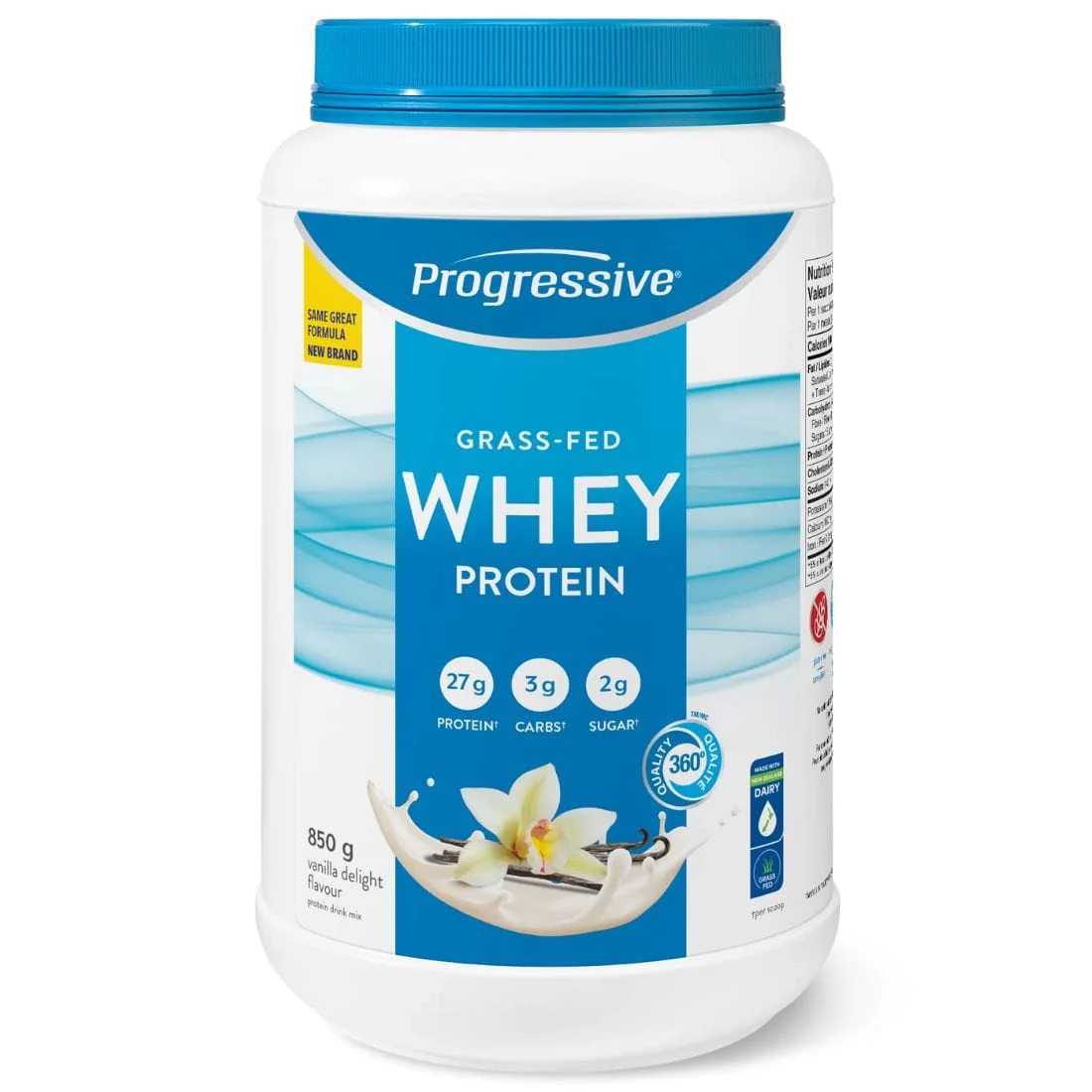
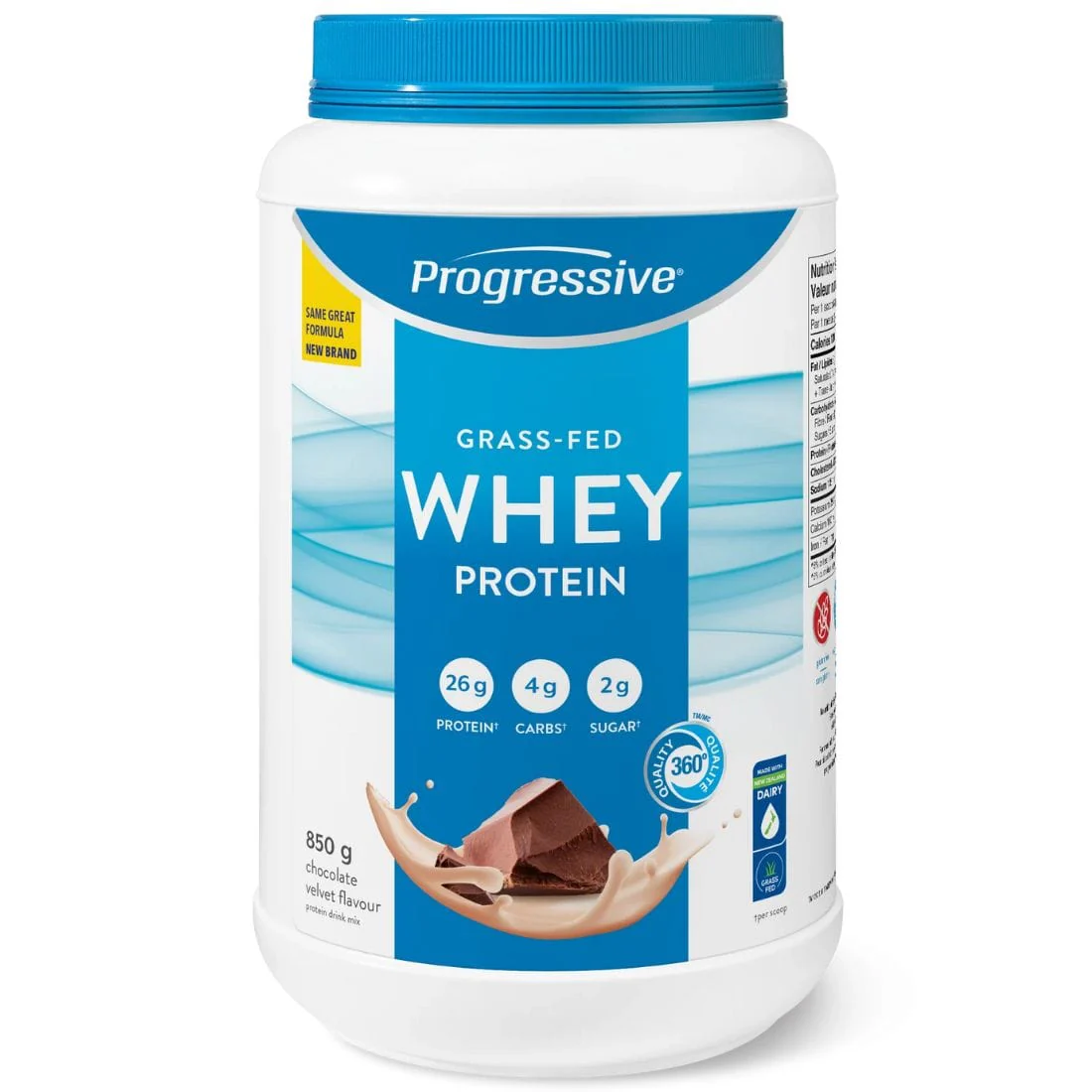
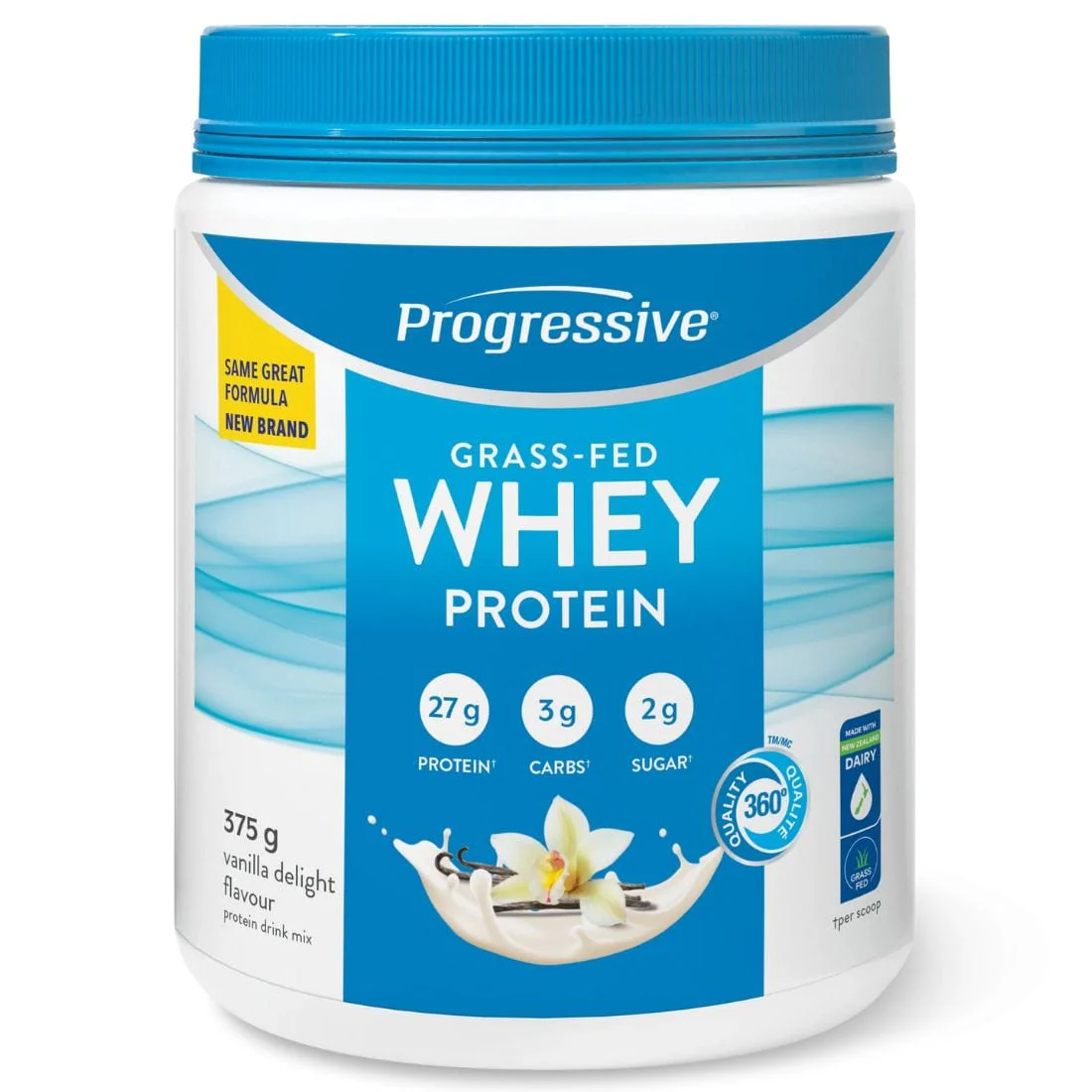
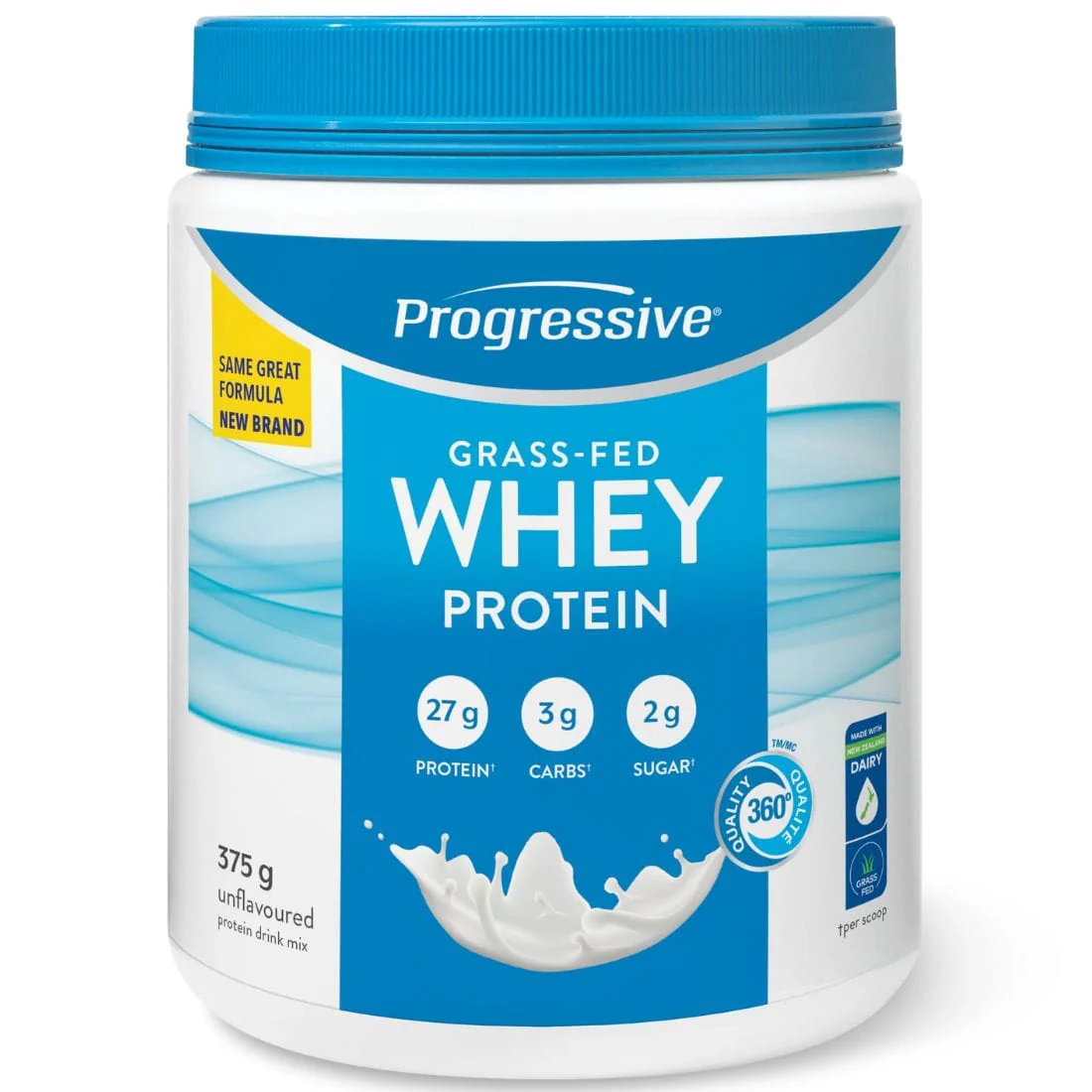
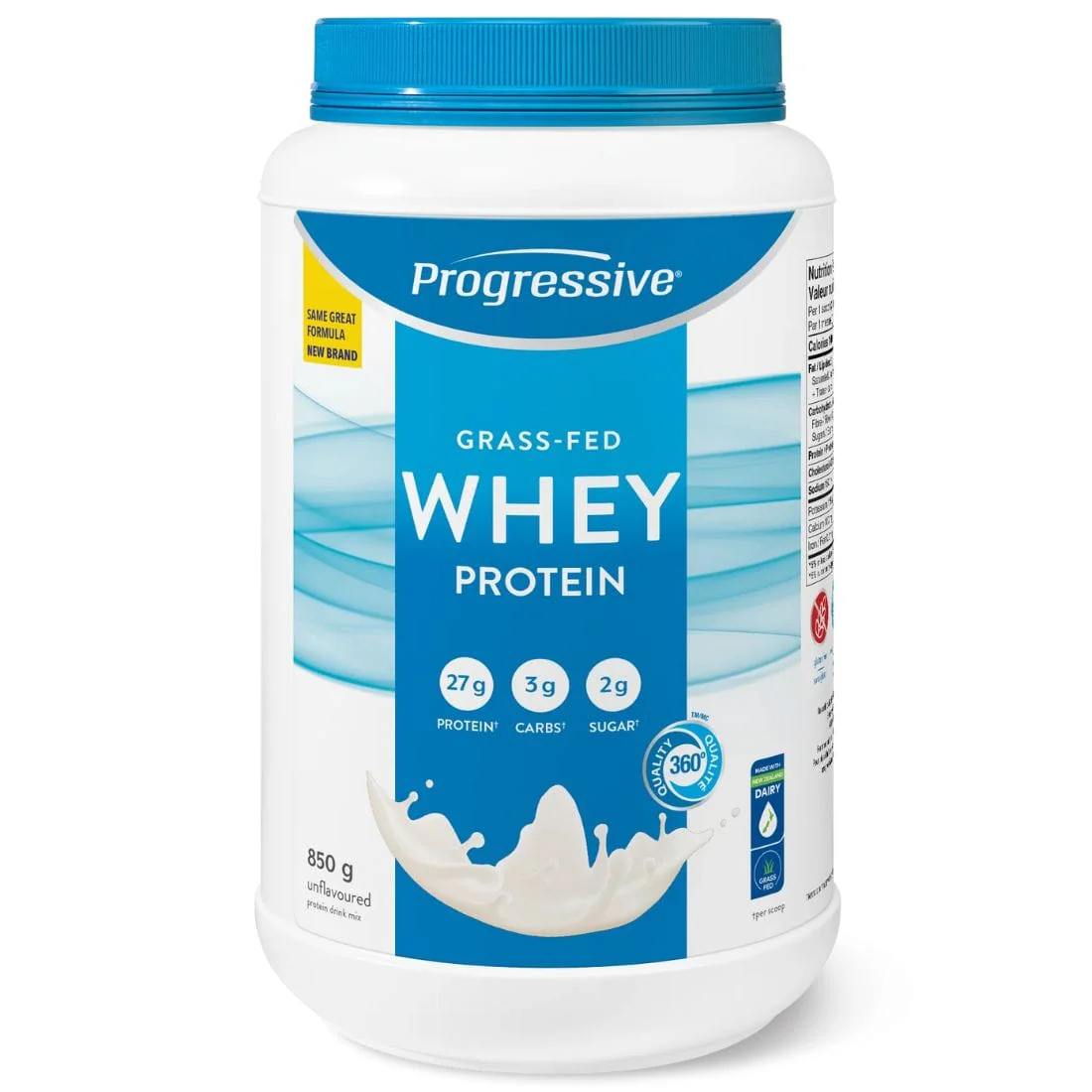
Progressive Grass Fed Whey Protein is a low-temperature filtered whey protein concentrate from grass-fed New Zealand dairy — delivering 27g of complete protein per scoop with only 2g of fat, 2g of sugar, and zero artificial flavours, colours, or sweeteners. The gentle low-temperature processing preserves the helpful natural proteins (immunoglobulins, lactoferrin) that high-heat processing destroys in lower-cost whey products. New Zealand grass-fed sourcing is widely considered the gold standard for dairy due to year-round pasture access and the country's hormone-free dairy regulations. Available in Chocolate Velvet, Vanilla Delight, or Unflavoured, in 375g or 850g sizes. Made by Progressive, a Canadian brand.
Vitamins Lowest Prices | Lowest Price in Canada — Guaranteed | Ships from Ontario across Canada
Quick Facts
| Brand | Progressive (Canadian) |
| Protein form | Whey concentrate (retains more natural proteins than isolate) |
| Source | Grass-fed New Zealand dairy |
| Per scoop | 27g protein, 2g fat, 2g sugar |
| Processing | Low-temperature filtered (preserves helpful natural proteins) |
| Flavours | Chocolate Velvet, Vanilla Delight, Unflavoured |
| Sizes | 375g or 850g |
| Clean ingredients | No artificial colours, flavours, or sweeteners; gluten-free |
Who Progressive Grass Fed Whey Is For
- Adults building muscle who want clean whey protein with helpful natural proteins intact
- People wanting grass-fed New Zealand dairy specifically for quality and sourcing standards
- Anyone reducing artificial sweeteners who still wants real chocolate or vanilla flavour
- Active people seeking post-workout recovery protein from a high-quality source
- Adults wanting whey concentrate (retains immune-supportive components) rather than isolate
- People who prefer Canadian brands committed to clean ingredient lists
Who this product is NOT for: Vegans, vegetarians who avoid dairy, and people with dairy allergies. People with significant lactose intolerance may prefer whey isolate (like PVL Iso Sport) which has less lactose than concentrate. Athletes requiring Informed-Choice certification for drug-tested sport should choose a sport-certified protein (like PVL Iso Sport). If you want the absolute lowest cost per gram of protein, basic whey concentrate without grass-fed sourcing costs less. People who specifically want sweeter, candy-like flavour from artificial sweeteners may find this more natural.
Vitamart's Take
Grass-fed New Zealand whey is real quality, and Progressive uses low-temperature filtering that keeps the helpful proteins intact instead of cooking them out. 27g per scoop is a proper muscle-building dose. The clean ingredient list (no artificial sweeteners, no fillers) puts this in the premium tier without being over-priced. If you need protein certified for drug-tested sport, PVL Iso Sport is the call. If you just want quality grass-fed whey for daily recovery and muscle support, this is the sensible choice.
How Progressive Grass Fed Whey Compares
Progressive Grass Fed Whey Concentrate vs PVL Iso Sport (Isolate)
Both are grass-fed New Zealand whey — the differences are concentrate vs isolate, and clean-label vs sport-certified. Progressive uses whey concentrate (more natural proteins, slightly more lactose, more natural flavour). PVL Iso Sport uses whey isolate (near-zero lactose, leaner, Informed-Choice tested for banned substances). Choose Progressive for daily clean whey with natural proteins intact; choose PVL for drug-tested sport competition or significant lactose sensitivity.
Progressive Grass Fed Whey vs Generic Whey Concentrate
Generic whey concentrates from large bulk-manufacturer brands use conventional dairy with no grass-fed sourcing, often heat-processed (destroying helpful natural proteins) and sweetened with sucralose/acesulfame. Lower cost per scoop, but you're getting basic protein without the quality differentiation. Progressive costs more per serving but delivers genuinely different ingredient quality.
Progressive Grass Fed Whey vs Casein Protein
Whey is fast-absorbing (1–2 hours) — best for post-workout. Casein is slow-absorbing (6–7 hours) — better before bed for overnight muscle protein synthesis. Many athletes use both. Different timing tools for different purposes.
Progressive Grass Fed Whey vs Plant Protein (Pea/Hemp/Rice Blends)
Plant proteins are vegan, dairy-free, easier on sensitive digestion. Whey absorbs faster and has higher leucine content (best for muscle protein synthesis). For non-vegans, whey is generally the more effective muscle-building protein. Choose plant if vegan/dairy-free is needed; whey for maximum muscle-building per gram.
Why Grass-Fed and Low-Temperature Processing Matter
- Grass-fed fatty acid profile. Grass-fed dairy contains more omega-3 fatty acids and conjugated linoleic acid (CLA) than grain-fed dairy. The difference is in the small amount of fat that remains in whey concentrate — not transformative, but a real quality difference.
- Hormone-free regulations. New Zealand prohibits rBGH/rBST growth hormones in dairy production. For people who prefer hormone-free dairy sourcing, New Zealand whey is the clean choice.
- Year-round pasture access. New Zealand's climate allows year-round outdoor grazing, producing more consistent grass-fed dairy than countries where cows must be barn-fed during winter.
- Helpful natural proteins. Quality whey contains immunoglobulins (immune-supportive proteins), lactoferrin (iron-binding antimicrobial protein), and growth factors. High-heat processing breaks these proteins down, leaving you with the amino acids but losing the helpful function.
- Low-temperature filtering. Progressive's processing preserves the helpful natural proteins that distinguish quality whey from a generic amino acid source. Lower-cost whey products use high-heat processing that's faster and lower-cost but destroys these components.
- Concentrate vs isolate trade-off. Whey concentrate (70–80% protein) retains more helpful proteins, immunoglobulins, and natural fats with their fatty acid benefits. Whey isolate (90%+ protein) is more filtered, removing more lactose and fat but also stripping out some helpful components. Concentrate is the better daily choice for most people; isolate is better for lactose-sensitive individuals or those wanting maximum protein per calorie.
- Clean ingredient list. No artificial sweeteners (sucralose, acesulfame potassium), no artificial colours, no fillers. Naturally sweetened. This matters if you're sensitive to artificial sweeteners or simply prefer to minimize them.
- 27g protein dose. Sweet spot for muscle protein synthesis. Research shows 20–40g per serving is the effective range; 27g hits the middle of that range.
How To Use
Adults: Mix 1 scoop with 250–350ml (8–12oz) of cold water, milk, or non-dairy milk in a shaker bottle. For post-workout muscle support, take within 30–60 minutes. Can be used between meals as a protein top-up, or added to smoothies, oatmeal, and baking. Most adults benefit from 1–2 servings daily; very active people may use 2–3.
Cautions: Not for use by people with dairy allergies or severe lactose intolerance (whey isolate is better-tolerated than concentrate but still contains dairy proteins). Consult your healthcare practitioner if you have kidney disease, are pregnant or breastfeeding, or have a medical condition affecting protein metabolism.
Frequently Asked Questions
➕ What's the difference between concentrate and isolate?
➕ Is the grass-fed sourcing actually worth more?
➕ What about lactose intolerance?
➕ When should I take it?
➕ How does the natural sweetening taste?
➕ How much protein do I actually need daily?
Pairs Well With
- Creatine — the most-researched performance supplement; classic stack with whey
- Multivitamins — fills micronutrient gaps in training-focused diets
- Omega-3 Fish Oils — supports recovery and inflammation balance
- L-Glutamine — added recovery support for high-volume training
💡 Subscribe & save up to 10% on every order — never run out of your daily supplements.
Compare Similar Products
- All Whey Proteins
- Grass-Fed Whey Proteins
- All Protein Powders
- Sports Supplements
About Vitamart
Vitamart.ca is Canada's vitamin specialist. We've been selling vitamins and supplements to Canadian families since 2005, shipping from our Ontario warehouse to every province. We believe in quality products you trust at prices you love — no fancy packaging markups, no pushy upsells, just the vitamins you need at the lowest prices in Canada. Backed by our Low Price Guarantee: find a lower advertised price at a Canadian competitor and we'll beat it by 1¢.
Vitamins Lowest Prices.
Original: $13.77
-65%$13.77
$4.82More Images

Progressive Grass Fed Whey Protein, 100% New Zealand Whey, Gluten Free Whey Protein Powder
Progressive Grass Fed Whey Protein Details
Progressive Grass Fed Whey Protein is a low-temperature filtered whey protein concentrate from grass-fed New Zealand dairy — delivering 27g of complete protein per scoop with only 2g of fat, 2g of sugar, and zero artificial flavours, colours, or sweeteners. The gentle low-temperature processing preserves the helpful natural proteins (immunoglobulins, lactoferrin) that high-heat processing destroys in lower-cost whey products. New Zealand grass-fed sourcing is widely considered the gold standard for dairy due to year-round pasture access and the country's hormone-free dairy regulations. Available in Chocolate Velvet, Vanilla Delight, or Unflavoured, in 375g or 850g sizes. Made by Progressive, a Canadian brand.
Vitamins Lowest Prices | Lowest Price in Canada — Guaranteed | Ships from Ontario across Canada
Quick Facts
| Brand | Progressive (Canadian) |
| Protein form | Whey concentrate (retains more natural proteins than isolate) |
| Source | Grass-fed New Zealand dairy |
| Per scoop | 27g protein, 2g fat, 2g sugar |
| Processing | Low-temperature filtered (preserves helpful natural proteins) |
| Flavours | Chocolate Velvet, Vanilla Delight, Unflavoured |
| Sizes | 375g or 850g |
| Clean ingredients | No artificial colours, flavours, or sweeteners; gluten-free |
Who Progressive Grass Fed Whey Is For
- Adults building muscle who want clean whey protein with helpful natural proteins intact
- People wanting grass-fed New Zealand dairy specifically for quality and sourcing standards
- Anyone reducing artificial sweeteners who still wants real chocolate or vanilla flavour
- Active people seeking post-workout recovery protein from a high-quality source
- Adults wanting whey concentrate (retains immune-supportive components) rather than isolate
- People who prefer Canadian brands committed to clean ingredient lists
Who this product is NOT for: Vegans, vegetarians who avoid dairy, and people with dairy allergies. People with significant lactose intolerance may prefer whey isolate (like PVL Iso Sport) which has less lactose than concentrate. Athletes requiring Informed-Choice certification for drug-tested sport should choose a sport-certified protein (like PVL Iso Sport). If you want the absolute lowest cost per gram of protein, basic whey concentrate without grass-fed sourcing costs less. People who specifically want sweeter, candy-like flavour from artificial sweeteners may find this more natural.
Vitamart's Take
Grass-fed New Zealand whey is real quality, and Progressive uses low-temperature filtering that keeps the helpful proteins intact instead of cooking them out. 27g per scoop is a proper muscle-building dose. The clean ingredient list (no artificial sweeteners, no fillers) puts this in the premium tier without being over-priced. If you need protein certified for drug-tested sport, PVL Iso Sport is the call. If you just want quality grass-fed whey for daily recovery and muscle support, this is the sensible choice.
How Progressive Grass Fed Whey Compares
Progressive Grass Fed Whey Concentrate vs PVL Iso Sport (Isolate)
Both are grass-fed New Zealand whey — the differences are concentrate vs isolate, and clean-label vs sport-certified. Progressive uses whey concentrate (more natural proteins, slightly more lactose, more natural flavour). PVL Iso Sport uses whey isolate (near-zero lactose, leaner, Informed-Choice tested for banned substances). Choose Progressive for daily clean whey with natural proteins intact; choose PVL for drug-tested sport competition or significant lactose sensitivity.
Progressive Grass Fed Whey vs Generic Whey Concentrate
Generic whey concentrates from large bulk-manufacturer brands use conventional dairy with no grass-fed sourcing, often heat-processed (destroying helpful natural proteins) and sweetened with sucralose/acesulfame. Lower cost per scoop, but you're getting basic protein without the quality differentiation. Progressive costs more per serving but delivers genuinely different ingredient quality.
Progressive Grass Fed Whey vs Casein Protein
Whey is fast-absorbing (1–2 hours) — best for post-workout. Casein is slow-absorbing (6–7 hours) — better before bed for overnight muscle protein synthesis. Many athletes use both. Different timing tools for different purposes.
Progressive Grass Fed Whey vs Plant Protein (Pea/Hemp/Rice Blends)
Plant proteins are vegan, dairy-free, easier on sensitive digestion. Whey absorbs faster and has higher leucine content (best for muscle protein synthesis). For non-vegans, whey is generally the more effective muscle-building protein. Choose plant if vegan/dairy-free is needed; whey for maximum muscle-building per gram.
Why Grass-Fed and Low-Temperature Processing Matter
- Grass-fed fatty acid profile. Grass-fed dairy contains more omega-3 fatty acids and conjugated linoleic acid (CLA) than grain-fed dairy. The difference is in the small amount of fat that remains in whey concentrate — not transformative, but a real quality difference.
- Hormone-free regulations. New Zealand prohibits rBGH/rBST growth hormones in dairy production. For people who prefer hormone-free dairy sourcing, New Zealand whey is the clean choice.
- Year-round pasture access. New Zealand's climate allows year-round outdoor grazing, producing more consistent grass-fed dairy than countries where cows must be barn-fed during winter.
- Helpful natural proteins. Quality whey contains immunoglobulins (immune-supportive proteins), lactoferrin (iron-binding antimicrobial protein), and growth factors. High-heat processing breaks these proteins down, leaving you with the amino acids but losing the helpful function.
- Low-temperature filtering. Progressive's processing preserves the helpful natural proteins that distinguish quality whey from a generic amino acid source. Lower-cost whey products use high-heat processing that's faster and lower-cost but destroys these components.
- Concentrate vs isolate trade-off. Whey concentrate (70–80% protein) retains more helpful proteins, immunoglobulins, and natural fats with their fatty acid benefits. Whey isolate (90%+ protein) is more filtered, removing more lactose and fat but also stripping out some helpful components. Concentrate is the better daily choice for most people; isolate is better for lactose-sensitive individuals or those wanting maximum protein per calorie.
- Clean ingredient list. No artificial sweeteners (sucralose, acesulfame potassium), no artificial colours, no fillers. Naturally sweetened. This matters if you're sensitive to artificial sweeteners or simply prefer to minimize them.
- 27g protein dose. Sweet spot for muscle protein synthesis. Research shows 20–40g per serving is the effective range; 27g hits the middle of that range.
How To Use
Adults: Mix 1 scoop with 250–350ml (8–12oz) of cold water, milk, or non-dairy milk in a shaker bottle. For post-workout muscle support, take within 30–60 minutes. Can be used between meals as a protein top-up, or added to smoothies, oatmeal, and baking. Most adults benefit from 1–2 servings daily; very active people may use 2–3.
Cautions: Not for use by people with dairy allergies or severe lactose intolerance (whey isolate is better-tolerated than concentrate but still contains dairy proteins). Consult your healthcare practitioner if you have kidney disease, are pregnant or breastfeeding, or have a medical condition affecting protein metabolism.
Frequently Asked Questions
➕ What's the difference between concentrate and isolate?
➕ Is the grass-fed sourcing actually worth more?
➕ What about lactose intolerance?
➕ When should I take it?
➕ How does the natural sweetening taste?
➕ How much protein do I actually need daily?
Pairs Well With
- Creatine — the most-researched performance supplement; classic stack with whey
- Multivitamins — fills micronutrient gaps in training-focused diets
- Omega-3 Fish Oils — supports recovery and inflammation balance
- L-Glutamine — added recovery support for high-volume training
💡 Subscribe & save up to 10% on every order — never run out of your daily supplements.
Compare Similar Products
- All Whey Proteins
- Grass-Fed Whey Proteins
- All Protein Powders
- Sports Supplements
About Vitamart
Vitamart.ca is Canada's vitamin specialist. We've been selling vitamins and supplements to Canadian families since 2005, shipping from our Ontario warehouse to every province. We believe in quality products you trust at prices you love — no fancy packaging markups, no pushy upsells, just the vitamins you need at the lowest prices in Canada. Backed by our Low Price Guarantee: find a lower advertised price at a Canadian competitor and we'll beat it by 1¢.
Vitamins Lowest Prices.
Product Information
Product Information
Shipping & Returns
Shipping & Returns
Description
Progressive Grass Fed Whey Protein Details
Progressive Grass Fed Whey Protein is a low-temperature filtered whey protein concentrate from grass-fed New Zealand dairy — delivering 27g of complete protein per scoop with only 2g of fat, 2g of sugar, and zero artificial flavours, colours, or sweeteners. The gentle low-temperature processing preserves the helpful natural proteins (immunoglobulins, lactoferrin) that high-heat processing destroys in lower-cost whey products. New Zealand grass-fed sourcing is widely considered the gold standard for dairy due to year-round pasture access and the country's hormone-free dairy regulations. Available in Chocolate Velvet, Vanilla Delight, or Unflavoured, in 375g or 850g sizes. Made by Progressive, a Canadian brand.
Vitamins Lowest Prices | Lowest Price in Canada — Guaranteed | Ships from Ontario across Canada
Quick Facts
| Brand | Progressive (Canadian) |
| Protein form | Whey concentrate (retains more natural proteins than isolate) |
| Source | Grass-fed New Zealand dairy |
| Per scoop | 27g protein, 2g fat, 2g sugar |
| Processing | Low-temperature filtered (preserves helpful natural proteins) |
| Flavours | Chocolate Velvet, Vanilla Delight, Unflavoured |
| Sizes | 375g or 850g |
| Clean ingredients | No artificial colours, flavours, or sweeteners; gluten-free |
Who Progressive Grass Fed Whey Is For
- Adults building muscle who want clean whey protein with helpful natural proteins intact
- People wanting grass-fed New Zealand dairy specifically for quality and sourcing standards
- Anyone reducing artificial sweeteners who still wants real chocolate or vanilla flavour
- Active people seeking post-workout recovery protein from a high-quality source
- Adults wanting whey concentrate (retains immune-supportive components) rather than isolate
- People who prefer Canadian brands committed to clean ingredient lists
Who this product is NOT for: Vegans, vegetarians who avoid dairy, and people with dairy allergies. People with significant lactose intolerance may prefer whey isolate (like PVL Iso Sport) which has less lactose than concentrate. Athletes requiring Informed-Choice certification for drug-tested sport should choose a sport-certified protein (like PVL Iso Sport). If you want the absolute lowest cost per gram of protein, basic whey concentrate without grass-fed sourcing costs less. People who specifically want sweeter, candy-like flavour from artificial sweeteners may find this more natural.
Vitamart's Take
Grass-fed New Zealand whey is real quality, and Progressive uses low-temperature filtering that keeps the helpful proteins intact instead of cooking them out. 27g per scoop is a proper muscle-building dose. The clean ingredient list (no artificial sweeteners, no fillers) puts this in the premium tier without being over-priced. If you need protein certified for drug-tested sport, PVL Iso Sport is the call. If you just want quality grass-fed whey for daily recovery and muscle support, this is the sensible choice.
How Progressive Grass Fed Whey Compares
Progressive Grass Fed Whey Concentrate vs PVL Iso Sport (Isolate)
Both are grass-fed New Zealand whey — the differences are concentrate vs isolate, and clean-label vs sport-certified. Progressive uses whey concentrate (more natural proteins, slightly more lactose, more natural flavour). PVL Iso Sport uses whey isolate (near-zero lactose, leaner, Informed-Choice tested for banned substances). Choose Progressive for daily clean whey with natural proteins intact; choose PVL for drug-tested sport competition or significant lactose sensitivity.
Progressive Grass Fed Whey vs Generic Whey Concentrate
Generic whey concentrates from large bulk-manufacturer brands use conventional dairy with no grass-fed sourcing, often heat-processed (destroying helpful natural proteins) and sweetened with sucralose/acesulfame. Lower cost per scoop, but you're getting basic protein without the quality differentiation. Progressive costs more per serving but delivers genuinely different ingredient quality.
Progressive Grass Fed Whey vs Casein Protein
Whey is fast-absorbing (1–2 hours) — best for post-workout. Casein is slow-absorbing (6–7 hours) — better before bed for overnight muscle protein synthesis. Many athletes use both. Different timing tools for different purposes.
Progressive Grass Fed Whey vs Plant Protein (Pea/Hemp/Rice Blends)
Plant proteins are vegan, dairy-free, easier on sensitive digestion. Whey absorbs faster and has higher leucine content (best for muscle protein synthesis). For non-vegans, whey is generally the more effective muscle-building protein. Choose plant if vegan/dairy-free is needed; whey for maximum muscle-building per gram.
Why Grass-Fed and Low-Temperature Processing Matter
- Grass-fed fatty acid profile. Grass-fed dairy contains more omega-3 fatty acids and conjugated linoleic acid (CLA) than grain-fed dairy. The difference is in the small amount of fat that remains in whey concentrate — not transformative, but a real quality difference.
- Hormone-free regulations. New Zealand prohibits rBGH/rBST growth hormones in dairy production. For people who prefer hormone-free dairy sourcing, New Zealand whey is the clean choice.
- Year-round pasture access. New Zealand's climate allows year-round outdoor grazing, producing more consistent grass-fed dairy than countries where cows must be barn-fed during winter.
- Helpful natural proteins. Quality whey contains immunoglobulins (immune-supportive proteins), lactoferrin (iron-binding antimicrobial protein), and growth factors. High-heat processing breaks these proteins down, leaving you with the amino acids but losing the helpful function.
- Low-temperature filtering. Progressive's processing preserves the helpful natural proteins that distinguish quality whey from a generic amino acid source. Lower-cost whey products use high-heat processing that's faster and lower-cost but destroys these components.
- Concentrate vs isolate trade-off. Whey concentrate (70–80% protein) retains more helpful proteins, immunoglobulins, and natural fats with their fatty acid benefits. Whey isolate (90%+ protein) is more filtered, removing more lactose and fat but also stripping out some helpful components. Concentrate is the better daily choice for most people; isolate is better for lactose-sensitive individuals or those wanting maximum protein per calorie.
- Clean ingredient list. No artificial sweeteners (sucralose, acesulfame potassium), no artificial colours, no fillers. Naturally sweetened. This matters if you're sensitive to artificial sweeteners or simply prefer to minimize them.
- 27g protein dose. Sweet spot for muscle protein synthesis. Research shows 20–40g per serving is the effective range; 27g hits the middle of that range.
How To Use
Adults: Mix 1 scoop with 250–350ml (8–12oz) of cold water, milk, or non-dairy milk in a shaker bottle. For post-workout muscle support, take within 30–60 minutes. Can be used between meals as a protein top-up, or added to smoothies, oatmeal, and baking. Most adults benefit from 1–2 servings daily; very active people may use 2–3.
Cautions: Not for use by people with dairy allergies or severe lactose intolerance (whey isolate is better-tolerated than concentrate but still contains dairy proteins). Consult your healthcare practitioner if you have kidney disease, are pregnant or breastfeeding, or have a medical condition affecting protein metabolism.
Frequently Asked Questions
➕ What's the difference between concentrate and isolate?
➕ Is the grass-fed sourcing actually worth more?
➕ What about lactose intolerance?
➕ When should I take it?
➕ How does the natural sweetening taste?
➕ How much protein do I actually need daily?
Pairs Well With
- Creatine — the most-researched performance supplement; classic stack with whey
- Multivitamins — fills micronutrient gaps in training-focused diets
- Omega-3 Fish Oils — supports recovery and inflammation balance
- L-Glutamine — added recovery support for high-volume training
💡 Subscribe & save up to 10% on every order — never run out of your daily supplements.
Compare Similar Products
- All Whey Proteins
- Grass-Fed Whey Proteins
- All Protein Powders
- Sports Supplements
About Vitamart
Vitamart.ca is Canada's vitamin specialist. We've been selling vitamins and supplements to Canadian families since 2005, shipping from our Ontario warehouse to every province. We believe in quality products you trust at prices you love — no fancy packaging markups, no pushy upsells, just the vitamins you need at the lowest prices in Canada. Backed by our Low Price Guarantee: find a lower advertised price at a Canadian competitor and we'll beat it by 1¢.
Vitamins Lowest Prices.